

Choosing the right Battery Management System (BMS) for your LiFePO₄ (Lithium Iron Phosphate) battery is crucial for safety, performance, and longevity. A well-matched BMS protects against overcharging, deep discharging, short circuits, and overheating—common issues that can damage your battery.
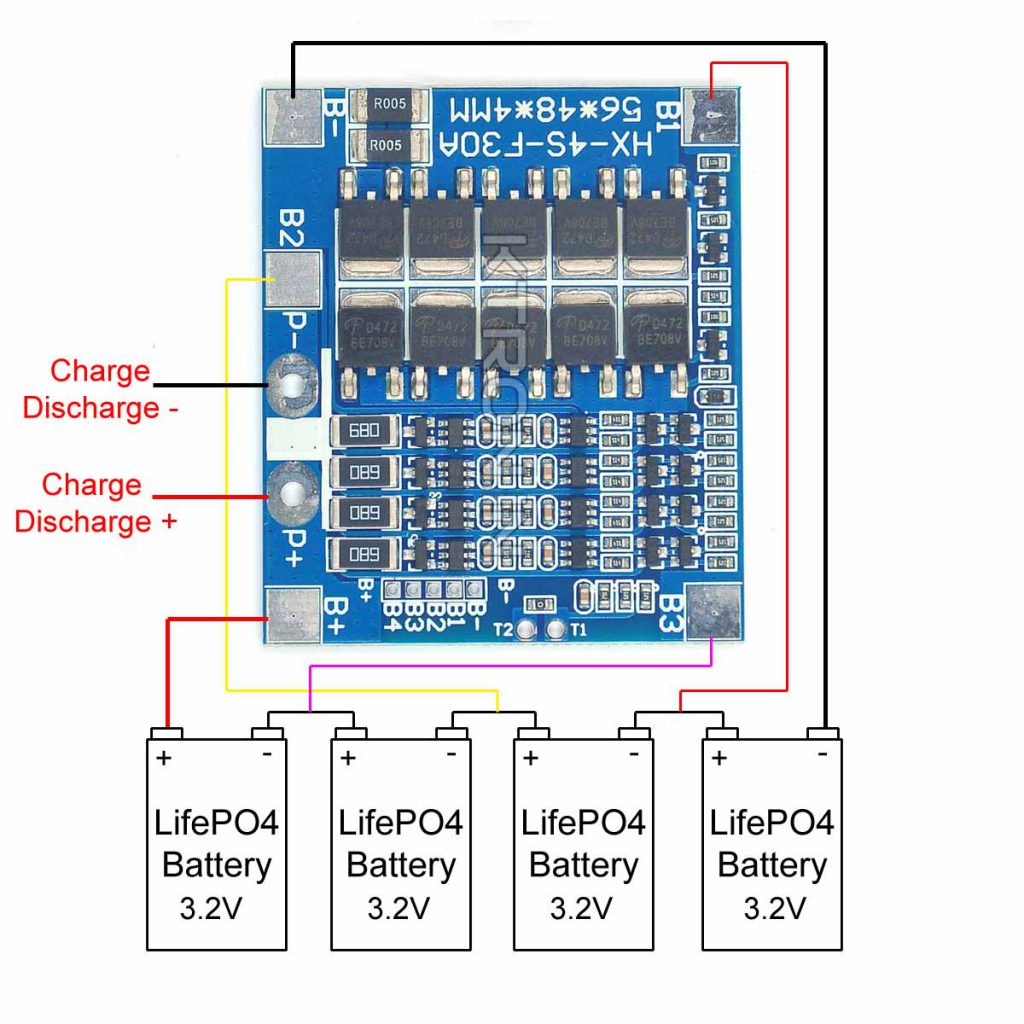

In this complete guide, we’ll cover:
- What is a BMS and why is it important?
- Key factors in selecting a BMS for LiFePO₄ batteries
- Types of BMS: Passive vs. Active Balancing
- Voltage & current ratings explained
- Top BMS brands and recommendations
- Installation tips and common mistakes to avoid
1. What is a BMS & Why is it Essential for LiFePO₄ Batteries?
A Battery Management System (BMS) is an electronic system that monitors and manages lithium-ion batteries. For LiFePO₄ batteries, a BMS ensures:
- Overcharge Protection – Prevents voltage spikes beyond 3.65V per cell
- Over-discharge Protection – Avoids cell damage below 2.5V
- Short Circuit & Overcurrent Protection – Cuts off power during faults
- Temperature Monitoring – Prevents overheating risks
- Cell Balancing – Keeps all cells at equal voltage for longer lifespan
Without a BMS, your LiFePO₄ battery can fail prematurely or even become a fire hazard.
2. How to Choose the Right BMS for LiFePO₄ Batteries
A. Voltage & Cell Count
LiFePO₄ cells have a nominal voltage of 3.2V. The BMS must match your battery’s total voltage:
| Battery Configuration | Total Voltage (Nominal) | BMS Voltage Rating |
|---|---|---|
| 1S (Single Cell) | 3.2V | 3.2V BMS |
| 4S (4 Cells in Series) | 12.8V | 12V-16V BMS |
| 8S (8 Cells in Series) | 25.6V | 24V BMS |
| 16S (16 Cells in Series) | 51.2V | 48V BMS |
B. Current Rating (Amps)
Your BMS must handle the maximum continuous current your system draws.
- For small applications (e.g., solar lights, DIY projects): 20A-50A BMS
- For electric bikes/scooters: 50A-100A BMS
- For solar power systems & EVs: 100A-300A+ BMS
Formula to calculate required BMS current:
Max Current (A) = Total Load (W) / Battery Voltage (V)
Example: A 1000W inverter on a 12V battery needs at least 83A (1000W ÷ 12V = 83.3A).
C. Balancing Type: Passive vs. Active
| Feature | Passive Balancing | Active Balancing |
|---|---|---|
| How it works | Burns excess energy as heat | Transfers energy between cells |
| Efficiency | Lower efficiency | Higher efficiency |
| Cost | Cheaper | More expensive |
| Best for | Small batteries, budget builds | High-performance systems |
Recommendation:
- For budget builds: Passive balancing (good enough for most users)
- For premium setups (EVs, solar storage): Active balancing (extends battery life)
3. Best BMS Brands for LiFePO₄ Batteries
Here are some trusted BMS brands for LiFePO₄ applications with direct links to their products:
- Daly BMS – Reliable, affordable, good for DIY projects
- JK BMS – Advanced balancing, Bluetooth monitoring
- Ant BMS – High-current support (up to 500A)
- Overkill Solar BMS – Great for 12V/24V solar setups
4. Installation Tips & Common Mistakes
Do’s:
- Check polarity – Wrong wiring can fry your BMS
- Use proper insulation – Prevent short circuits
- Test before final assembly – Verify voltage readings
Don’ts:
- Ignore cell balancing – Unbalanced cells reduce lifespan
- Exceed BMS current limits – Can cause overheating
- Skip temperature sensors – Critical for safety
Final Thoughts
Selecting the right BMS for your LiFePO₄ battery ensures safety, efficiency, and long-term performance. Always match:
- Voltage & cell count
- Current rating
- Balancing type (passive/active)
Need help choosing? Drop a comment below with your battery specs, and we’ll recommend the best BMS for your setup!
FAQ
Q: Can I use a lead-acid BMS for LiFePO₄?
A: No! LiFePO₄ requires a dedicated lithium BMS with correct voltage cutoffs.
Q: What happens if I don’t use a BMS?
A: Risk of overcharging, cell damage, or fire. Always use a BMS!
Q: How often should I check cell balancing?
A: Every 6-12 months for optimal performance.